Jump to content

TRC Timberworks

Archive for September, 2010

  • 27 September 2010

    Japanese Porch Roof

    Japanese Porch Roof

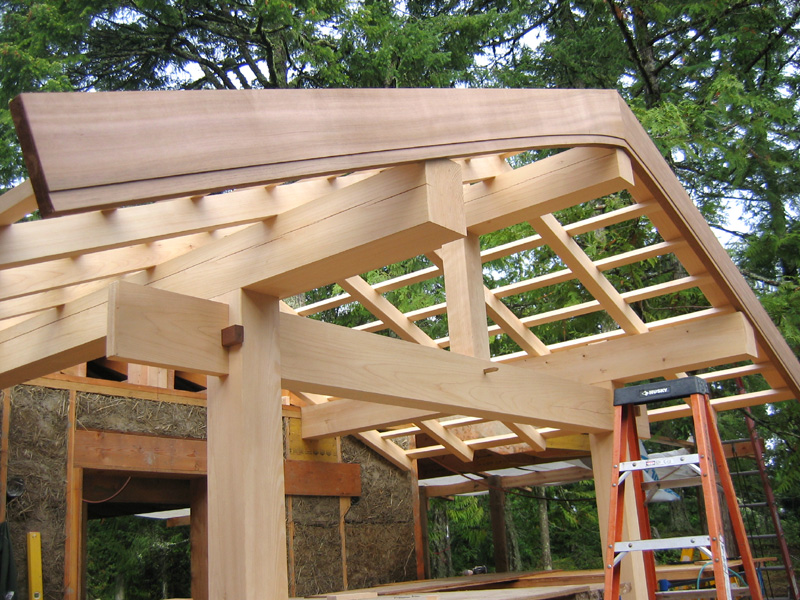
    The humble grace of this covered porch belies the complexity of the wooden joinery used to craft the roof. Japanese timber framing has a centuries old tradition of intricate joinery and precision finishing details.
    Tim helped build this porch roof at a Japanese timber framing course, learning from and working alongside renowned Japanese woodworker Dale Brotherton and natural building pioneer Robert Laporte.

    Inspired by the elegant architecture and precision craftsmanship of Japanese timber buildings, Tim was excited to increase his knowledge and further hone his skills in the beautiful setting of Salt Spring Island.

    Tim took this photo during a Japanese timber framing course taught by Dale Brotherton and Robert Laporte. For more information, visit their websites at www.japanesecarpentry.com and www.econest.com

    Share
  • 26 September 2010

    Japanese Roof Frame

    Japanese Roof Frame

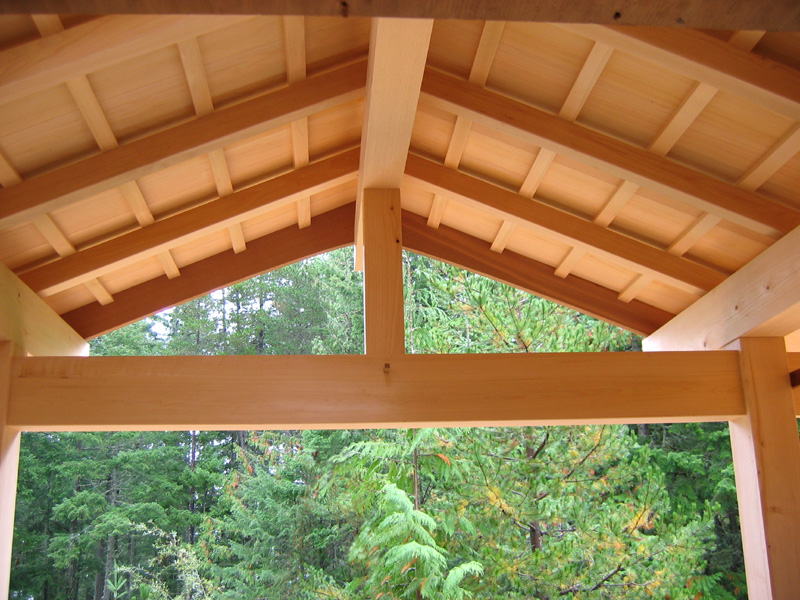
    Each side of the fascia for this porch roof is made from a single piece of wood, the bottom stepped detail achieved with a Japanese skew plane.
    The fascia has joinery in the back face to receive all the wood pieces of the layered roof, preserving the beautiful sweeping grain of the Western red cedar wood on the front face.

    Tim took this photo during a Japanese timber framing course taught by Dale Brotherton and Robert Laporte. For more information, visit their websites at www.japanesecarpentry.com and www.econest.com

    Share
  • 25 September 2010

    Japanese Wedged Through Tenon

    Japanese Wedged Through Tenon

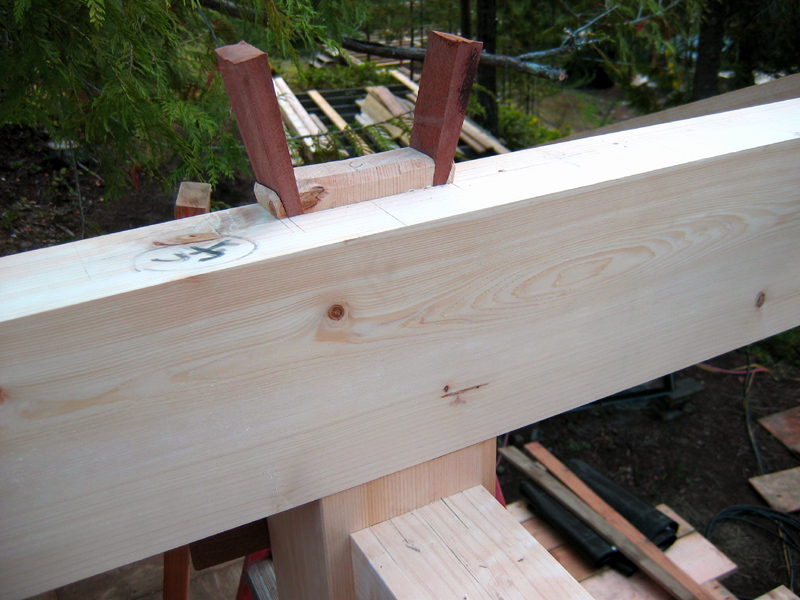
    Rather than the more common through tenon joint where wedges are pounded through square holes in the tenon, this joint uses wedges in a creative way to make a very secure wooden joint option.
    This through tenon has two 6″ angled cuts starting at the tip of the tenon and running down towards the post. The wedges are pounded into these cuts once the tenon is installed in the mortise. The mortise in the receiving beam is cut with a wider angle near the top edge to allow the tenon room to open when the wedges are driven in using a timber framing mallet.

    This process essentially creates a dovetail joint, securing the tenon in the mortise. After the wedges are in place, the excess wedge material is sawn off flush with the rest of the tenon.

    Tim took this photo during a Japanese timber framing course taught by Dale Brotherton and Robert Laporte. For more information, visit their websites at www.japanesecarpentry.com and www.econest.com

    Share
  • 25 September 2010

    Japanese Roof Beam

    Japanese Roof Beam

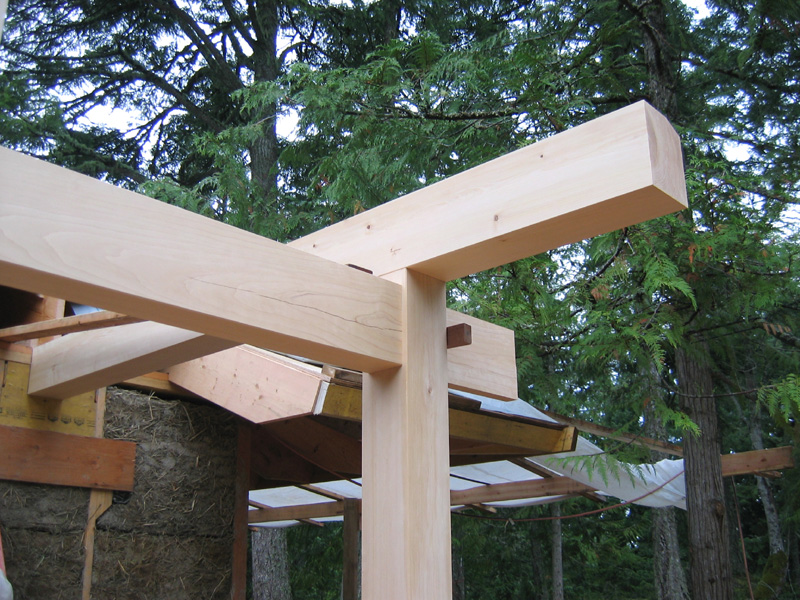
    The first roof beam is installed in a front porch for a light clay/fibre home. Rafters will sit on two roof beams and a ridge beam as the base of the Japanese layered roof system.
    The wood is Port Orford white cedar, a cousin to the cypress commonly used in Japan for timber frame building.

    Tim took this photo during a Japanese timber framing course taught by Dale Brotherton and Robert Laporte. For more information, visit their websites at www.japanesecarpentry.com and www.econest.com

    Share
  • 24 September 2010

    Japanese Through Tenon Raised

    Japanese Through Tenon Raised

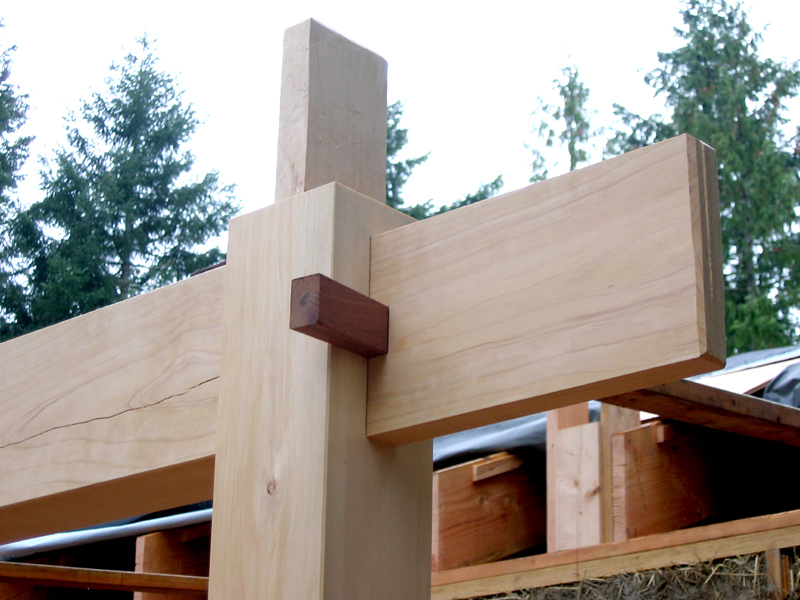
    The through tenon is installed in the receiving post and secured with a wedge made of mahogany wood that was hand sawn and hand planed.
    Japanese hand saws are pulled instead of pushed, which allows the saw blade to be thinner. This means that less wood is removed during the cut, resulting in a faster and a more accurate cut.

    Generally through tenons are pegged with two wedges. However, the owner of this entranceway preferred the look of one wedge, and the strength of the joint was not comprised by this decision.

    Tim took this photo during a Japanese timber framing course taught by Dale Brotherton and Robert Laporte. For more information, visit their websites at www.japanesecarpentry.com and www.econest.com

    Share
  • 22 September 2010

    Japanese Through Tenon

    Japanese Through Tenon

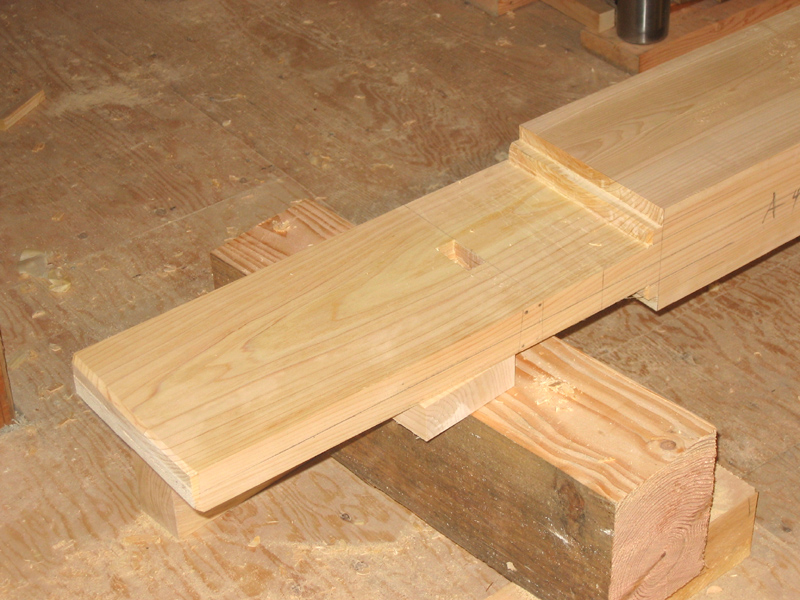
    The Japanese through tenon in this photo has a special feature that improves the performance of the joint in a timber frame.
    In a typical Western style through tenon, the wood of the tenon itself provides the strength of the joint. However, in this Japanese tenon, a wider “stub” section fits into a housing on the connecting post.

    The larger section of wood between the main beam and the tenon increases the strength of the joint. It also adds stability by reducing the amount of twisting in the beam.

    Tim took this photo during a Japanese timber framing course taught by Dale Brotherton and Robert Laporte. For more information, visit their websites at www.japanesecarpentry.com and www.econest.com

    Share
  • 20 September 2010

    Hand Planing

    Hand Planing

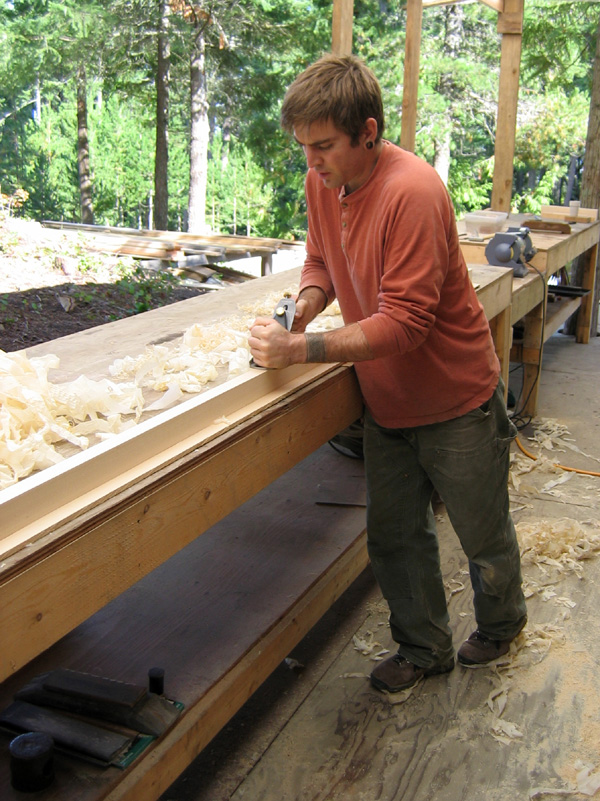
    When properly sharpened and set up, a hand plane can produce a finish that is much finer and smoother than sand paper could ever achieve.
    Using a hand plane to shave off paper thin shavings makes the wood grain glow, bringing out the inherent beauty of the timbers. In Japan, it is very common to hand plane and not apply any finish, allowing the wood to develop a natural patina over time.

    Tim is using a Western hand plane, which is pushed forward along the wood. A Japanese hand plane is drawn towards the carpenter.

    This photo of Tim was taken during a Japanese timber framing course taught by Dale Brotherton and Robert Laporte. For more information, visit their websites at www.japanesecarpentry.com and www.econest.com

    Share
  • 19 September 2010

    Japanese Timber Park Gate

    Japanese Timber Park Gate

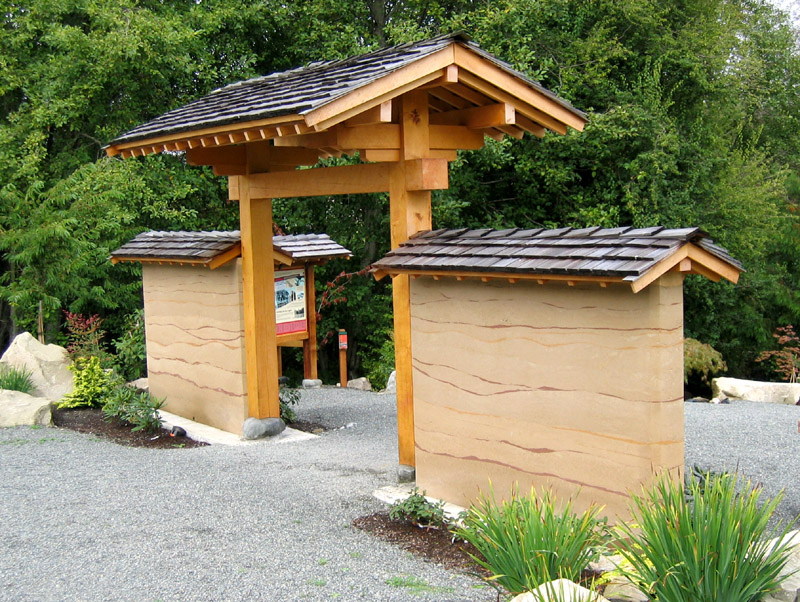
    Graced with a layered roof typical of Japanese architecture, Tim was inspired by this gate that welcomes visitors to Hope Park in Ganges on Salt Spring Island, British Columbia.
    The frame of the roof was built in layers, starting with three beams, then rafters on top of these, and finally purlins to support the T&G sheathing and roof tiles. The overall effect of the layered roof system is simple and dignified.

    The post bottoms are scribed to stones, keeping water and ground moisture from rotting the posts, and adding an element of natural beauty to the structure.

    Share
  • 19 September 2010

    Japanese Timber Bench

    Japanese Timber Bench

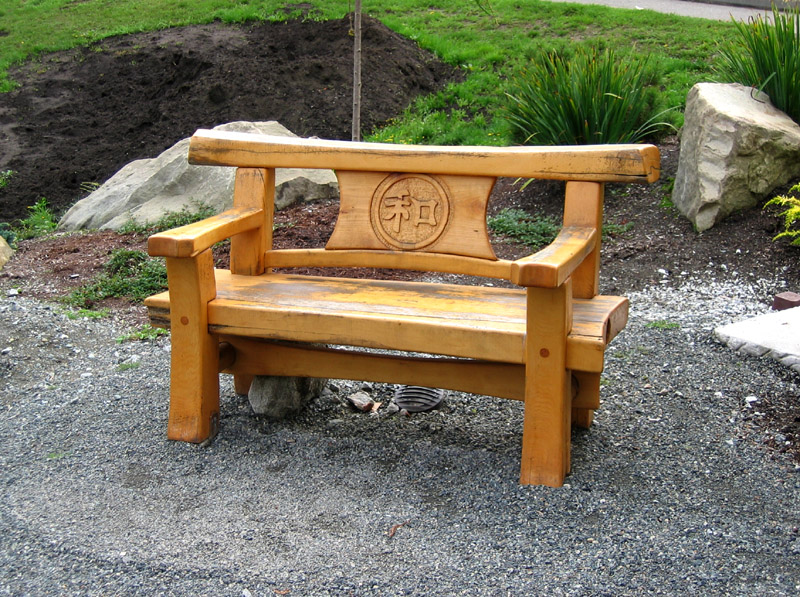
    This bench is an example of Japanese influenced timber furniture. The curving lines of the bench are similar in style to the curved roofs found in Japanese temples.

    During a trip to Salt Spring Island for a Japanese timber framing course, Tim saw this bench in Hope Park in the town of Ganges. The park is dedicated to acknowledging the history of Japanese Canadians.

    Share