Subscribe to our blog!
Posts Tagged ‘Timber Framing’
-
19 February 2013
Fancy ‘New’ Hewing Axe
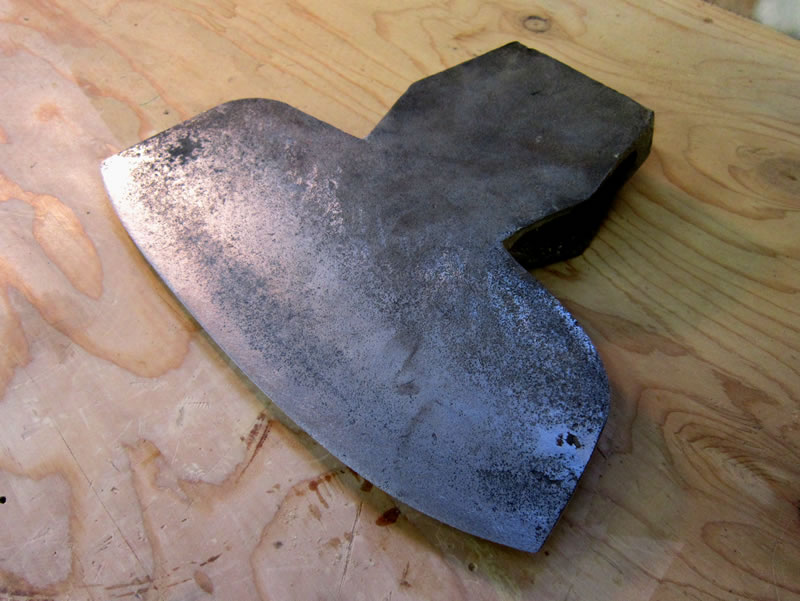
This is the hewing axe head that was used by an older gentleman to hand hew timbers for houses 30 years ago. My passion for hand tools got me excited about seeing if I could remediate this axe head, and the two day vinegar bath plus a wire brush did such an amazing job at taking off the rust.
Now I just need to resharpen the edge and either make or find a wooden handle to attach to the axe head. I love that such a non-toxic substance (vinegar) was able to restore the axe, and I hope to be able to use this axe to hew timbers for many years to come!
-
12 February 2013
Axe Getting A Vinegar Bath
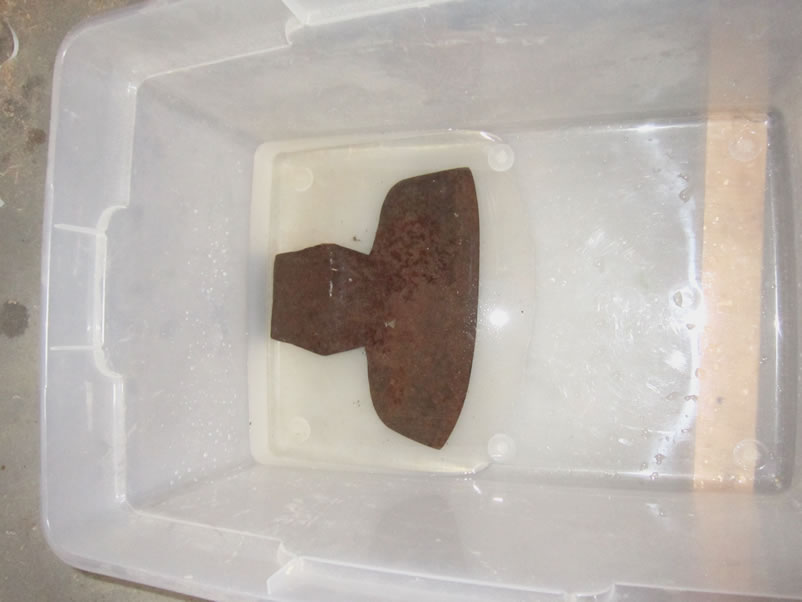
Here is the old hewing axe head that I found, getting a bath in regular vinegar to remove the rust. I was super surprised with the results!
After about two days in the vinegar, I was able to take a wire brush to it and, without much effort at all, I took off most of the rust. I’ll post that photo next, you’ll be surprised too. Vinegar! Who knew?
-
5 December 2012
Rescued Axe Head
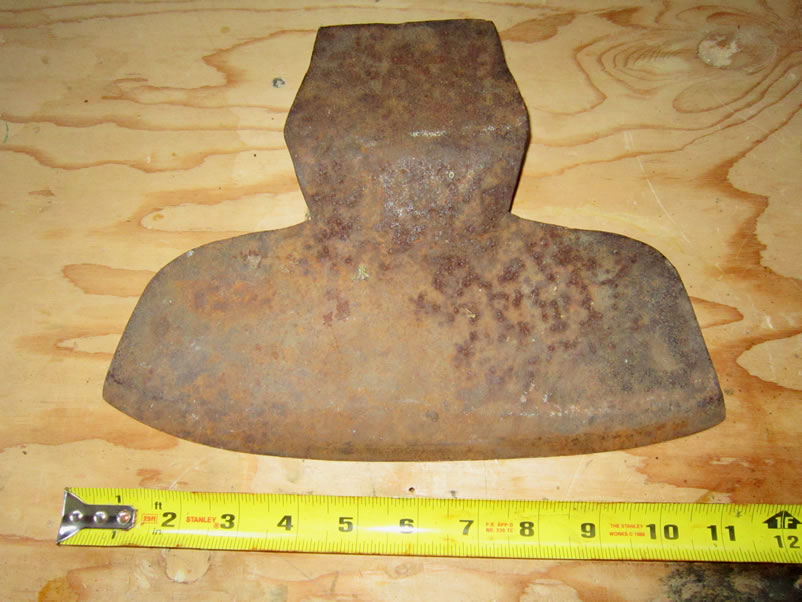
I’ve been looking around for older hand tools at antique stores and personal sales, hoping I’ll find some gems that I can use for planing or timber framing. I have some of my grandpa’s hand tools that are still in excellent condition; these older tools were made to last.
I found this head for a log hewing axe in the summer. An older gentleman was selling some of his tools, and this was from an axe that he used for timber framing homes 30 years ago. For the price tag of $10, I couldn’t resist (these axes usually run about $350 to $400 new), and I have an idea about how I can bring it back to life.
-
27 November 2012
Timber Accent Porch
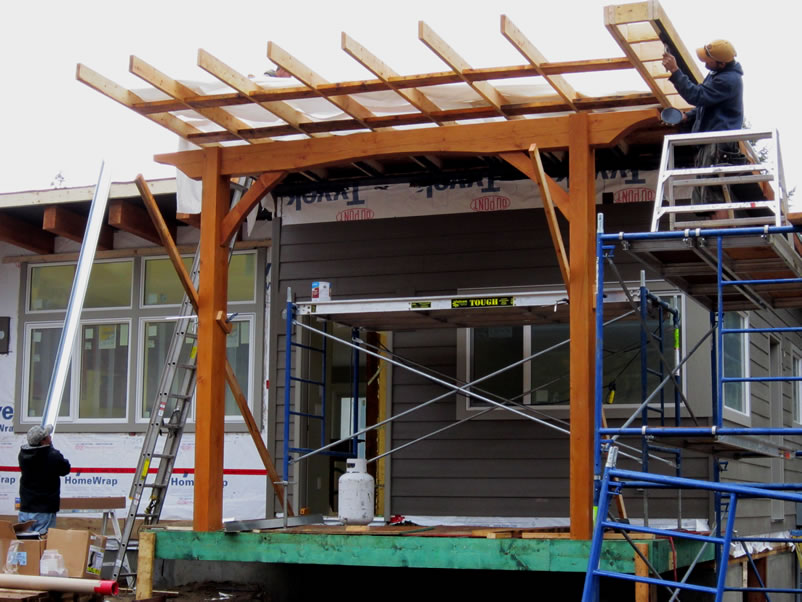
The owners of this new modular home wanted a timber look for their front porch, so they asked me to design and build an accent piece for their porch roof structure. They were really pleased when they saw it go up. It adds a timeless classic element, and the curves cut into the beam and the braces add a softer contrast to the straight lines of the house.
Here the modular home installation crew is working on the rafters for the porch. I’ll post a photo once the house is finished so you can see the final look.
-
15 September 2012
Beam Detail Done With a Chain Saw
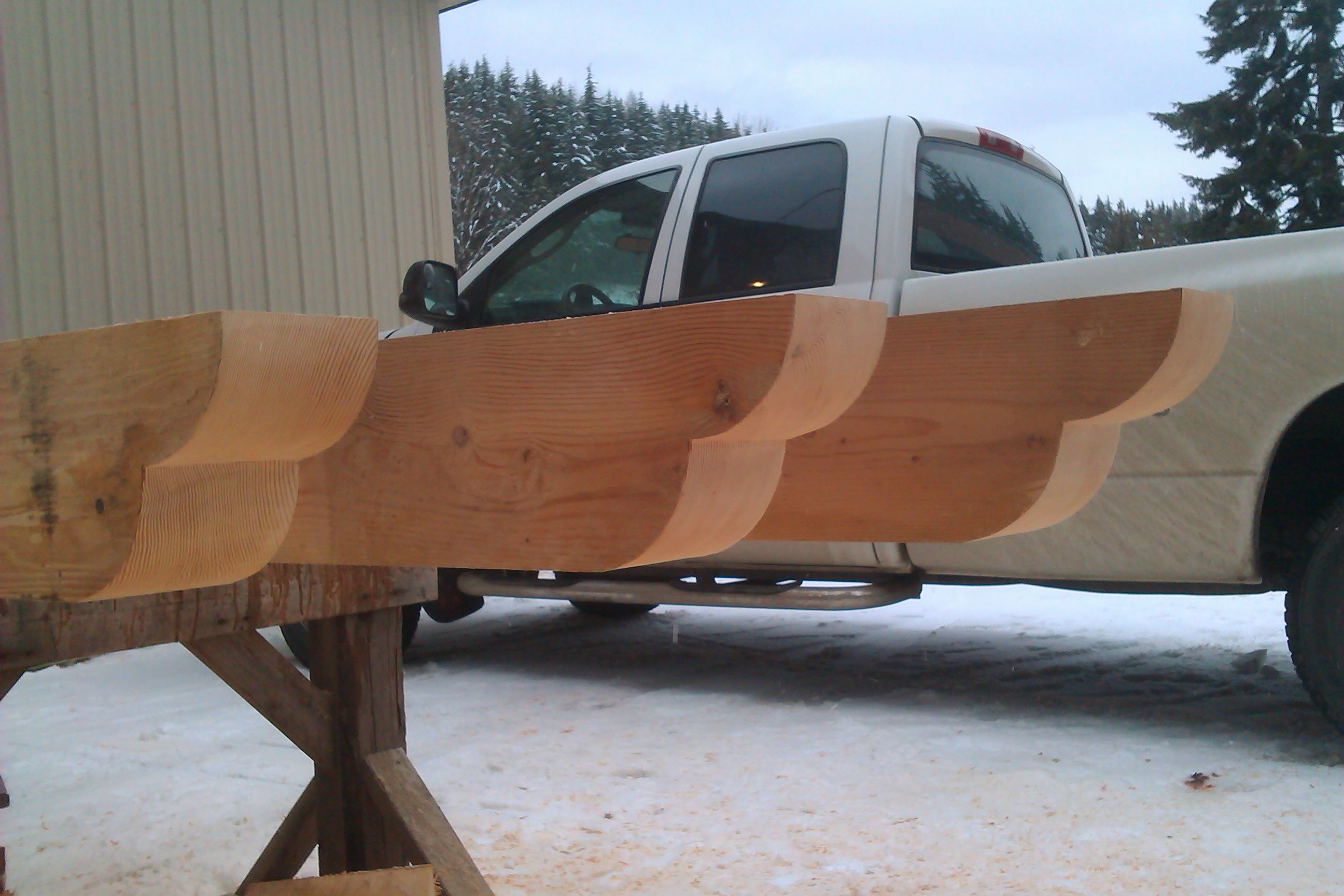
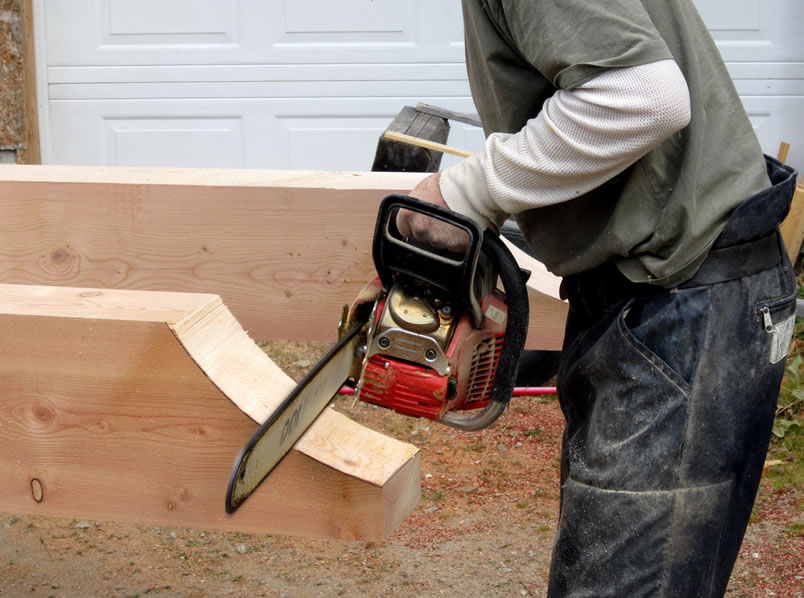
Okay, so it’s not carving, but I did have fun using the chain saw to create the detail work for these beams.
And I have started using an eco-friendly type of small engine gas that cuts down on exhaust emissions by an incredible amount. Running the chain saw now doesn’t stink and create a cloud of fumes. Apparently this gas is standard for small engines in Europe — and I can see why! Time for North America to catch up on this one. Check out: www.aspen.se (Select your country for English language.) I also use Greenplus Chain Saw-Bar Oil ES, which is not derived from petroleum. It is rapidly biodegradable, operator friendly and made from renewable resources. www.greenpluslubes.com
After marking the curve from the template I made, I cut out the majority of material with the chain saw, leaving a bit of room near the line in order to not cut too deep. Then I turned the chain saw perpendicular to the line and carefully shaved down small amounts of wood to get very close to the line. Finally, I cleaned up the curved face with an angle grinder and used a palm sander for a final smooth finish. The beam is upside down right now; when installed, the curved face will be on the bottom of the beam.
-
6 March 2012
Japanese Pergola
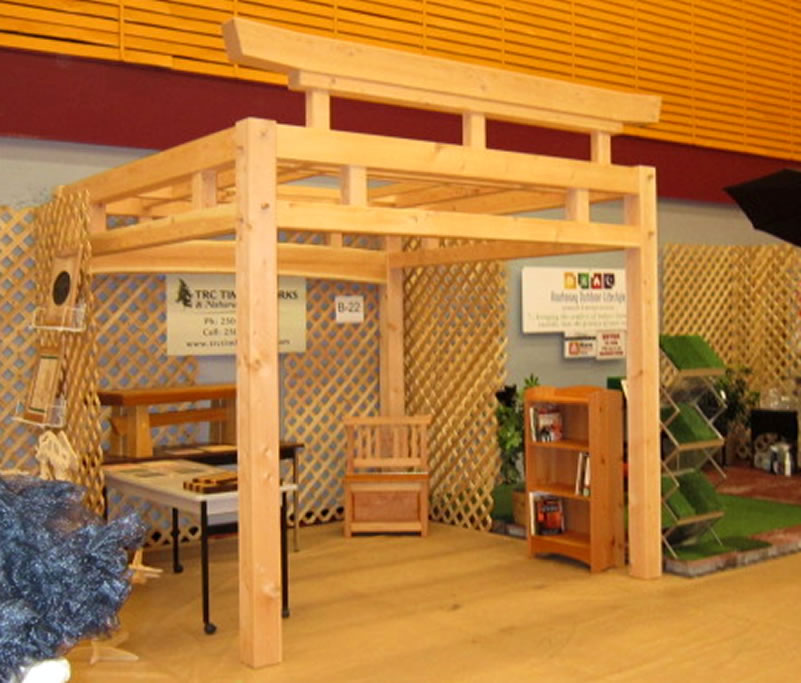
To show something a little different at this year’s Home & Lifestyle Expo in Castlegar, British Columbia, I decided to frame a Japanese style timber pergola. The front of the frame was inspired by Japanese Torii Gates, which mark the entrance to Shinto shrines and indicate that you have entered a holy place where the spirits are more likely to hear your prayers.
Although not obvious from the angle of this photo, there is a symmetrical lattice frame for the roof, which will easily take a glass roof or vines growing over the pagoda. The size of the frame is 10 feet by 10 feet and 12 feet high, crafted out of douglas fir sourced from the Harrop-Proctor Community Forest, which harvests timber sustainably and is Forest Stewardship Certified.
-
5 November 2011
Happy Worksite
Yes, the words “Happy” and “Work” can be in the same sentence! Especially when my family visits, and I get a big hug from my sweet daughter.
One of my goals is to create worksites that are both healthy and enjoyable. A 40 hour work week means we are spending a quarter of our lives at a worksite or office. I am still living while I am working, and I want my life to be purposeful, fulfilling, and enjoyable. So how can I achieve this at the worksite for me and everyone I work with?
Relationship building. Respectful communication. Safety for everyone on site and visitors (even family!) Healthy practices of using natural materials free of chemicals and pollutants. No smoking on site. Conflict resolution until everyone wins. Satisfaction in interesting and well-crafted projects. Shelter that is a home, not just a building. Personal growth through choice and dedication. A team where everyone is valued and listened to.
Happy worksites. Shouldn’t this be the norm? I plan to do my best to make it the norm. Will you join me?
~Tim
-
21 August 2011
The Wa of Hand Tools
“The Japanese word wa is a single kanji meaning ‘harmony; peace; peaceful.’ In common usage wa means ‘harmony’ as in being in harmony with one’s environment and it means “peaceful” as in being in a peaceful state of mind or feeling at peace.” ~Eri Takase
People keep asking me why would I use hand tools to cut this timber bed? It takes longer, involves more physical endurance, and the amount of precision necessary is astonishing.
My simple answer is the Japanese feeling of wa, or harmony, that I feel while working with hand tools. Noisy vibrating power tools don’t allow that feeling of peace to pervade my workspace or my body.
With hand tools, I can feel the grain of the wood so clearly, and my minute adjustments as I work with the wood become a flow and a rhythm that I find hard to describe. Using the small block hand plane, I can feel even the smallest variations in the wood, and learning to harmonize with that piece of wood in order to coax out the best finish draws my attention so fully that it becomes a meditation.
I also wanted to use woods for this bed that would give a gentle contrast in colour and grain. Maple and fir were my choices in the end, as they are both Canadian grown, and when combined in the same piece of furniture, they are different enough to provide interest while being complementary in tone.
Douglas fir for the timbers and rails of the bed frame was a great choice for durability as well as for its reddish glow that deepens over time. This wood was harvested locally, reducing the carbon footprint (less gas to truck the wood here!)
This bed was destined for Alberta with its arid climate, so I adjusted my joinery to take that into account. Wood is a living substance, and even after it has been harvested, it continues to change and move in tune to the rhythm of the seasons and the humidity in the air.
~Tim
-
18 August 2011
Japanese Wedged Through Tenon
I really enjoyed this bed project, as I was able to take some of the aspects of Japanese timber joinery and adapt them to the smaller scale bed frame. Since training with Dale Brotherton, I’ve fallen in love with Japanese timber architecture, so it was a pleasure to craft a bed with this style as the inspiration.
The wedged through tenon shown here is part of the headboard of the bed. The “posts” of the headboard have tenons at the top that slot all the way through the mortises of the “beams”. The tenons are held in place by wedges of wood that are pounded down into shallow lengthwise cuts in the tenon, thereby widening the end of the tenon so that it can no longer slip back out of the mortise. These create some stunning focal points on the bed frame and give the observer a hint as to the details of how the bed was crafted.
If you want to see more of how I hand cut this bed with human-powered tools, read my earlier “Furniture” blogs!
~Tim
-
10 May 2011
Clay Plaster Workshop
We are really excited about the opportunity to have artist and natural builder Kata Polano come to Winlaw in July to lead a clay plaster workshop, including the beautiful sculpting and decorating that is possible with earthen plasters.
This is the small office we will be plastering. It is a super-insulated timber frame building that incorporates solar power and passive solar design.
The walls are sheathed with plywood, so Kata will be showing us an effective method to integrate natural plaster with a more conventional wall system. This will allow workshop participants to adapt clay plaster to a wider variety of building projects, including new construction and renovations.
The owners of this 7 acre homestead have been using permaculture design principles as they develop their buildings and gardens. The main house is one of the oldest straw bale houses in the Slocan Valley, and the office was built two years ago.
Kata will be teaching us how to mix, apply, sculpt, and decorate with natural clay plaster. The workshop will show how to finish plaster on flat walls as well as sculpt artistic elements onto two of the corners of the office.
To register for the workshop, visit our Workshops page.